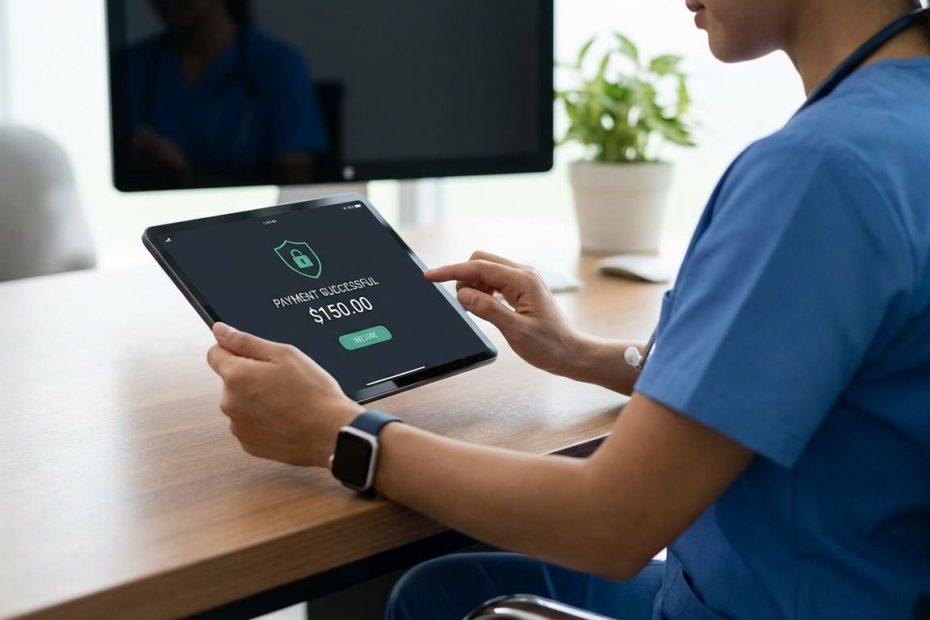
Real-time payments are changing patient billing by letting you collect, post, confirm, and refund payments within seconds instead of waiting through traditional settlement delays. For healthcare organizations, that means faster cash flow, fewer payment-status calls, and a billing experience that feels closer to the digital services patients already use every day.
You are no longer deciding whether digital billing matters. You are deciding whether your billing operation will match how patients expect to pay, how quickly your staff can resolve balances, and how much friction your revenue cycle can remove without creating new risk. This article shows where real-time payments fit, why healthcare is moving in this direction, what can go wrong, and what you need to put in place before you offer instant payment options at scale.
What Are Real-Time Payments In Healthcare, And How Do They Work For Patient Billing?
Real-time payments in healthcare let funds move immediately, around the clock, with confirmation delivered right away. In patient billing, that can support instant bill payment through a portal, mobile device, text-to-pay link, digital wallet, or embedded checkout flow inside a patient account. The operational value is not limited to speed. You also gain immediate visibility into whether a payment was made, whether it posted, and whether staff need to take any follow-up action.
If you manage revenue cycle operations, the most practical point to understand is that patients do not need to see the payment rail to benefit from it. They see a simple payment experience. Behind the scenes, your bank, processor, practice management platform, or patient billing vendor handles the instant movement of funds. That lets your team reduce manual reconciliation work, reduce delays between payment and posting, and shorten the time between statement delivery and collected revenue.
This matters because traditional healthcare billing still depends on delayed settlement, fragmented payment methods, mailed statements, and separate workflows for refunds and payment plans. Real-time capability lets you tighten that cycle. When a patient pays, your staff can see it immediately. When a refund is due after claim reprocessing or overpayment, the return of funds can happen much faster too. That creates a cleaner experience for patients and a more controlled financial process for your organization.
The two major instant payment rails in the United States are the Real-Time Payments network from The Clearing House and the Federal Reserve’s FedNow Service. Their growth signals that instant money movement is no longer experimental. It is becoming standard infrastructure. For healthcare providers, that opens the door to better patient payment workflows without forcing a full rebuild of the billing system from scratch.
Why Are Hospitals And Medical Groups Moving Toward Real-Time Patient Payments Now?
You are operating in a market where patient responsibility represents a larger share of collected revenue, and patients expect digital convenience in every financial interaction. Traditional medical billing was built around paper statements, delayed adjudication visibility, batch processing, and phone-based collection support. That model creates lag, confusion, and avoidable cost. Real-time payments offer a direct path to reduce those delays without waiting for a full revenue cycle redesign.
The shift is also being pushed by consumer preference. A large share of patients already prefer paying medical bills online, and provider organizations are under pressure to make that process easier. Digital self-service is no longer optional in patient finance. If your billing experience forces patients through multiple portals, unclear balances, or delayed payment confirmation, your organization creates friction at the exact moment when patients are deciding whether to pay, call, postpone, or dispute the bill.
There is another driver that senior leaders should not ignore: trust. Healthcare billing has a credibility problem. Patients often receive multiple statements, balances that seem disconnected from insurance processing, and payment requests from unfamiliar processors. Speed alone will not fix that. Yet a well-designed real-time payment model can support clarity if you pair it with accurate balance presentation, immediate receipts, updated account status, and fewer handoffs between systems.
Financial leaders are also focused on collection efficiency. Real-time payment acceptance can reduce days in accounts receivable, improve payment predictability, and lower inbound service volume tied to payment verification. If your team still spends time answering whether a payment went through, when it will post, or whether a refund has been issued, you already have evidence that settlement speed affects operating cost. Faster rails reduce those calls and free staff for work that actually protects margin.
Do Patients Actually Want To Pay Medical Bills Instantly Online Or By Text?
Patients want convenience, but they do not want speed without explanation. That distinction matters. A patient may gladly use online bill pay, text-to-pay, or a mobile wallet when the amount is clear and the source is trusted. That same patient may delay payment when the balance looks unfamiliar, the insurer has not finished processing, or the payment request arrives through a domain they do not recognize.
This is where many healthcare organizations make the wrong move. They focus on payment channel expansion without fixing billing communication. If you present a confusing bill faster, you do not improve the experience. You simply accelerate resistance. Patients need to know what they owe, why they owe it, whether insurance has processed the claim, and whether financial assistance or a payment plan is available before they commit funds.
You can see this pattern across provider frequently asked questions, healthcare finance reporting, and patient discussions online. Patients use portals. They pay online. They respond to digital reminders. Yet they also compare the bill with the Explanation of Benefits, question duplicate balances, and worry about scams tied to unfamiliar payment links. That means your payment experience must combine speed with validation. The winning design is instant payment plus plain-language bill detail plus immediate confirmation.
If your organization offers text billing or mobile payment requests, brand trust becomes even more important. Patients need clear sender identification, secure login or account verification, and a payment screen that matches your organization’s identity. The more consistent the communication, the easier it becomes for patients to act without hesitation. Digital payment adoption rises when the patient feels confident that the request is legitimate and the balance is ready to pay.
Can Real-Time Payments Reduce Billing Confusion, Bad Debt, And Delayed Collections?
They can reduce some of the friction that drives bad debt and collection delay, but only when the billing process is accurate and transparent before the payment request is sent. Instant settlement is useful. Instant settlement on a disputed or poorly explained bill creates a different problem. If you want better results, real-time payments need to sit inside a billing workflow that already supports clear charges, updated insurance information, and visible patient options.
Billing confusion remains one of the biggest barriers to collection. Many healthcare organizations believe they explain costs well, yet patient complaints show a very different experience. Patients often struggle to understand out-of-pocket responsibility, timing, itemization, and assistance eligibility. When the bill itself is unclear, payment speed becomes secondary. A patient who does not trust the balance will not care that the transfer clears in seconds.
Where real-time payments do create measurable value is in the operational handoff between willingness to pay and completed payment. If a patient is ready to resolve a balance today, your system should not create a delay that pushes payment into tomorrow, next week, or after the statement is misplaced. Immediate payment capability can capture intent at the right moment, especially for urgent care, outpatient visits, discharge balances, deposits, and payment-plan installments.
Real-time rails also support faster refunds and more accurate account status. That matters more than many organizations realize. When patients overpay or claims are adjusted, delayed refunds damage trust and generate service calls. If your organization can issue money back quickly, update the account immediately, and show the transaction clearly, you reduce confusion on the back end as well. Better payment timing on the inbound and outbound side helps stabilize the entire billing relationship.
There is also a collections strategy angle. When you know a payment was received instantly and posted quickly, you can suppress follow-up reminders, avoid duplicate outreach, and reduce the chance that a patient receives a collection-style notice after already paying. That type of error erodes confidence fast. Real-time visibility helps your team act with cleaner data and better timing.
What Are The Risks Of Real-Time Patient Billing, Including Errors, Fraud, And Overcharging?
The biggest risk is simple: you can accelerate a flawed bill. Medical billing errors, duplicate charges, mismatched insurance information, and stale account balances already create disputes. If you add frictionless instant payment on top of those issues, you can increase complaints, refund volume, and reputational damage. Faster collection does not protect revenue if the underlying amount is wrong.
Fraud and scam perception are also major concerns. Patients regularly question payment messages that come from third-party processors or unfamiliar short links. If your digital billing strategy relies on text outreach, email nudges, or off-portal payment pages, your organization needs strong brand consistency, clear authentication, and direct confirmation steps. Patients should never have to guess whether a payment request is valid. When they hesitate, collections slow down and call volume rises.
You also need controls around overpayment and premature billing. Patients often wait for insurer processing to finish before they pay. If your system sends a real-time bill before adjudication is final, you increase the chance of collecting an amount that will later need correction. That adds refund work and undermines trust. A mature real-time billing program does not just move money faster. It controls when a request is triggered and whether the amount is ready for collection.
Another risk involves fairness and access. Complex billing systems already place more burden on patients who have lower financial literacy, weaker advocacy support, or less familiarity with digital tools. If your organization speeds up collections without making balances easier to understand, you may widen existing problems. Strong billing design includes itemized access, plain-language explanations, easy dispute channels, payment-plan visibility, and clear financial assistance options before pressure builds around payment.
Leadership should also pay attention to internal process failure. Real-time systems require cleaner integration between billing, patient accounting, payment processing, banking, and customer support. If one of those systems lags behind the others, patients may see one status while staff see another. That disconnect creates confusion quickly. Before launch, you need to know exactly how balances update, how reversals are handled, and how support teams will answer questions in real time.
How Do FedNow And The Real-Time Payments Network Change The Future Of Healthcare Billing?
These payment rails change healthcare billing by making instant settlement available on a national scale. That gives providers a new foundation for collecting patient payments, returning overpayments, sending reimbursements, and supporting payment-plan activity outside normal banking hours. If your organization has treated settlement timing as a fixed limitation, that assumption is no longer safe.
The Clearing House Real-Time Payments network has reported major transaction growth and a sharp increase in payment value, including strong usage during nights, weekends, and holidays. That matters for healthcare because patient billing does not happen only during business hours. Patients review statements after work, make portal payments late at night, and respond to reminders on weekends. A payment rail that matches those habits supports better collection timing and better patient convenience.
FedNow expands the institutional foundation for instant payments by increasing the reach of real-time money movement across participating financial institutions. For healthcare executives, the important point is not whether a patient understands the rail. The point is whether your bank, treasury team, and payment partners can use that rail to support faster and more reliable patient finance operations. When the ecosystem supports instant movement, your billing workflows become more flexible.
The strategic value goes beyond collecting a patient balance right away. Healthcare organizations can use instant payment capability for refunds after claim adjustments, reimbursements tied to overcollections, immediate payment-plan enrollment, and potentially faster disbursement tied to assistance or benefit programs. These use cases solve real operational pain. They also improve trust, which is often the missing ingredient in patient billing performance.
Still, these rails are infrastructure, not a patient experience by themselves. Your organization still needs to decide how the billing page looks, how balances are explained, how receipts are delivered, and how exceptions are handled. The provider groups that benefit most will be the ones that package instant settlement inside a billing journey that feels clear, secure, and easy to complete.
What Should Providers Do Before Offering Real-Time Payments To Patients?
Start with bill readiness. Before you add another payment method, confirm that your balances are adjudicated correctly, your statement language is understandable, and your account status updates reliably across systems. If the front-end payment option looks modern but the bill is still confusing, the improvement will be cosmetic. Real performance comes from pairing cleaner billing data with faster payment execution.
Your next priority is channel design. Patients should be able to move from statement to secure payment in a way that feels familiar and verified. That usually means a patient portal, trusted text-to-pay flow, digital wallet support, and a clearly branded payment page. Keep the experience consistent across channels so patients do not wonder whether one version of the bill is real and another is not. A fragmented digital path weakens adoption.
You also need visible patient choice before payment. Offer itemized bill access, insurance processing status when available, payment-plan enrollment, and financial assistance information near the payment action. This is where many organizations leave revenue on the table. Patients delay payment when they do not see a manageable path. If you present flexible options early, you improve collection odds without escalating frustration.
Operational readiness matters just as much. Define how payments post, how exceptions are worked, how refunds are approved, and how support teams handle same-day questions. Your call center, patient financial services team, treasury staff, and vendor partners need one shared operating model. If a patient pays instantly and your team cannot confirm it across systems, you lose the benefit of real-time capability.
Pilot by use case, not by broad ambition. Outpatient services, urgent care, ambulatory surgery, discharge balances, and refund-heavy workflows are often the strongest starting points. These areas tend to benefit from speed, digital convenience, and fewer manual touchpoints. Once you can measure lower call volume, faster posting, better collection timing, and reduced rework in one part of the business, you can scale with more control.
Measurement should stay tight from the start. Track payment conversion, time to post, refund cycle time, payment-plan take-up, complaint rate, and patient service contacts tied to billing confusion. Instant payment adoption is useful. Measurable reduction in friction is what justifies expansion. If the data shows faster money movement but no drop in calls or disputes, your organization still has work to do upstream.
How Will Real-Time Payments Reshape The Patient Financial Experience Over The Next Few Years?
You should expect patient billing to move toward a more connected, retail-style digital experience, but with stronger verification and clearer financial explanation than retail usually requires. Patients will increasingly expect one secure place to review a balance, confirm insurance activity, choose how to pay, receive confirmation, and see the account update right away. Organizations that still rely on delayed posting and fragmented communication will feel slower and less trustworthy by comparison.
That shift will affect more than collections. Scheduling, estimates, pre-service deposits, post-visit billing, refunds, and payment plans will start to feel like parts of one financial journey rather than disconnected events. The billing office, treasury team, patient access operation, and digital product teams will need to work more closely. Payment timing can no longer sit in a silo when it shapes patient satisfaction and cash performance at multiple points in the care journey.
You should also expect patient expectations to rise around transparency. Faster payment options make patients less tolerant of outdated billing habits. If a charge appears without explanation, if a refund takes too long, or if support staff cannot explain the account, patients will notice the inconsistency immediately. Real-time payments raise the standard for the entire billing operation. Once money can move instantly, patients assume information should move just as fast.
That is why the future of patient billing is not simply digital checkout. It is real-time clarity, real-time confirmation, and real-time account visibility. Providers that build around those principles will protect trust while improving collection efficiency. Providers that stop at the payment button will only solve part of the problem.
What Is The Main Benefit Of Real-Time Payments In Patient Billing?
- Faster patient payments and immediate confirmation
- Quicker posting, refunds, and account updates
- Lower call volume tied to payment status questions
- Better billing experience when paired with clear balance detail
Build A Billing Experience Patients Will Actually Complete
Real-time payments give you a chance to remove delay from one of the most frustrating parts of healthcare finance, but speed only works when the bill is accurate, understandable, and trusted. If you implement instant payment options with clean adjudication controls, visible patient choices, and immediate confirmation, you can improve collection timing and reduce avoidable service work. If you skip those foundations, you simply move confusion faster. The future of patient billing belongs to organizations that connect instant settlement with clear communication, secure delivery, and disciplined revenue cycle execution. Build that combination well, and you do more than collect faster, you make the payment experience easier for patients to complete with confidence.
References
- Mayo Clinic: Billing And Insurance Frequently Asked Questions
- The Clearing House: Real-Time Payments Network Records
- Federal Reserve Financial Services: FedNow Service Growth And Innovation
- J.P. Morgan: Healthcare Payments Trends Report
- Healthcare Financial Management Association: Curing Payment Confusion
- Consumer Financial Protection Bureau: Medical Debt Collection And Billing Errors
- JAMA Health Forum: Patient Advocacy And Problematic Medical Bills
- Reddit: Patient Complaints About Medical Billing
- Reddit: Explanation Of Benefits And Medical Bill Timing
- Reddit: Suspicious Medical Billing And Scam Concerns

Jeffrey Hammel is a chief financial officer in corporate finance with an MBA from Indiana University’s Kelley School of Business. He partners with boards and leadership teams on risk management, M&A integration, business planning, and growth—and is known for building trust-based, high-performance cultures.